
FORM THREE PHYSICS STUDY NOTES TOPIC TOPIC 7: MEASUREMENT OF THERMAL ENERGY & TOPIC 8: VAPOUR AND HUMIDITY

LINK OF OTHER SUBJECTS >>>>>
TOPIC TOPIC 7: MEASUREMENT OF THERMAL ENERGY
Heat Capacity
Heat capacity is the amount of heat required
to raise the temperature of an object or substance by one degree. The
temperature change is the difference between the final temperature ( Tf) and the initial temperature ( Ti).
The Factors which Determine Heat Quality of a Substance
Explain the factors which determine heat quality of a substance
Heat
is a form of energy transferred between bodies due to difference in
temperature between them. The energy possessed by the body due to its
temperature is called the internal thermal energy. The heat content is
due to the random motion of the particles that make up the body. The
heat content is determined by its mass, temperature change and the
specific heat capacity of the substance.
The Heat Capacity
Determine the heat capacity
Heat capacity is the quantity of heat required to raise the temperature of a substance by one degree Celsius.
Heat capacity = mass of the substance X specific heat capacity
Thus H.C = MC
Also
Example 1
Find the heat capacity of a lump of copper of mass 50kg. The specific heat capacity of copper is 420 J/ Kg ºc.
Data Given
Mass of copper, M= 50kg
The specific heat capacity of copper, C = 420J/KgºC
Required: To calculate heat capacity, H.C.
H.C = MC
= 50Kg x 420J/KgºC
= 21600J
=21KJ
Calculating a quantity of heat
- The quantity of heat required to change the temperature of a body with mass, M Kg by Q degree Celsius is MCQ joules.
- In order to raise the temperature of a body, heat must be supplied to it.
- In order to lower its temperature, heat must be removed from it.
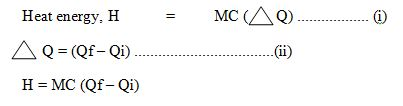
The Heat Equation is therefore written:
Heat Gained or Heat Lost = Mass X specific heat capacity X change in temperature
Change in temperature:
H =MCQ
Where
H=Heat gained / lost
M= Mass of the body
Q= change (Rise or fall) In Temperature of the body.
Example 2
Water
of mass 3kg is heated from 26ºc to 96ºC. Find the amount of heat
supplied to the water given that the specific heat capacity of water is
4.2 x 10³ J / Kg ºc
Data Given
Mass of water, M = 3Kg
Specific Heat capacity, C = 4.2 X 10³ j / Kgº C
Initial temperature, Qi= 26 ºC
Final Temperature, Qf = 96ºC
Required
The amount of heat, H
H= MCQ
C = H/MQ
H = MCQ
H = 3Kg x 4.2 x103 (96-26) ºC
C= 882000J= 882KJ
The Specific Heat Capacity
Determine the specific heat capacity
Specific
heat capacity is the quantity of heat required to raise the temperature
of a unit mass of a substance by one degree Celsius.
The quantity of heat supplied to or taken away from a body depends on:
- The mass of the body, M
- The temperature different, ΔT
- The thermal properties of the body.
Transfer of Heat
Heat energy tends to flow from High temperatures to Low temperatures
If
you pick up a warm object, heat energy transfers from the object to
your hands and your hands feel warm. If you pick up a cool object, heat
energy transfers from hands to the object and your hands feel cold.
Determining specific Heat capacity
- Calorimeter – Is the special instrument or vessel used for measurement of Heat.
- Calorimeter is highly polished metal can usually made of copper or aluminium.
- It is flitted with an insulating cover in which there are two holes.
- Two holes allow a thermometer and a stirrer to be inserted.
- The stirrer is made of the same metal as that of the calorimeter.
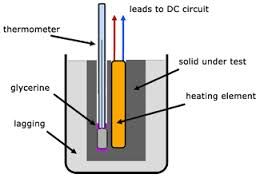
Demonstration of the specific Heat capacity of a solid
Determining specific Heat capacity by Method of Calculation.
Heat lost by solid, Hs = Ms x Cs (Qs – Qf)
Heat Gained by Calorimeterand stirrer, Hc = Mc x Cc (Qf – Qi)
Heat Gained by Water, HW = Mw x Cw (Qf – Qi)
But
the heat lost by the solid is equal to heat gained by the calorimeter
and stirrer plus the heat gained by the water in the calorimeter.
Hs = Hc + Hw
But
Heat gained by a calorimeter and content equal to heat lost by the solid.
Thus Hc + Hl = Hs
Mc Cc (Qf – Qi) + Mi Ci ( Qf-Qi) = Ms Cs ( Qs-Qs)
Example 3
A
piece of metal with a mass of 200g at a temperature of 100ºC is quickly
transferred into 50g of water at 20ºC find the final temperature of the
system ( specific Heat capacity of water Cw = 4200J/ Kg ºC specific
Heat capacity of the metal Cm = 400J/KgºC.
Ms Cs (Qs-Qf) = Mc Cc (Qf-Q) Mm Cw (Qf-Ql)

Where:
Cs. Is the specific Heat capacity of the solids.
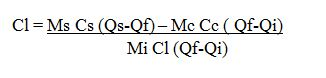
Determining the specific heat capacity of liquid, Cl
By calculation method;
Heat Gained by calorimeter and stirrer
Hc = Mc Cc (Qf – Qi)
Heat Gained by liquid
Hi = ML CL (Qf – Qi)
Heat lost by the solid
Hs = Ms Cs ( Qs-Qf)
Let
Q be the final Temperature of the system
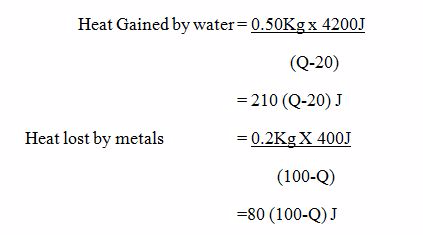
If there are no heat Losses to the surroundings, then.
(Heat gained by water) = (Heat lost by metal)
210 (Q-20) = 80(100 – Q)
21(Q-20) = 8 (100-Q)
21Q – 420 = 800 – 8Q
21Q +8Q = (800+420)
29Q = 1220
Q = (1220/29)
Q = 42.1ºC
Change
of state is the transformation of the condition of matter from one
(state) to another caused by the change In temperature.
The Behaviour of Particles of Matter by Applying Kinetic Theory
Explain the behaviour of particles of matter by applying kinetic theory
The
kinetic theory of matter (particle theory) says that all matter
consists of many, very small particles which are constantly moving or in
a continual state of motion. The degree to which the particles move is
determined by the amount of energy they have and their relationship to
other particles. The particles might be atoms, molecules or ions. Use of
the general term 'particle' means the precise nature of the particles
does not have to be specified.
Particle
theory helps to explain properties and behaviour of materials by
providing a model which enable us to visualise what is happening on a
very small scale inside those materials. As a model, it is useful
because it appears to explain many phenomena but as with all models it
does have limitations.
Solids, liquids and gases
| In solids the particles | In liquids the particles | In gases the particles |
|
|
|
The model can be used to help explain:
- the properties of matter
- what happens during physical changes such as melting, boiling and evaporating
The properties of matter
| Solids | Liquids | Gases |
|---|---|---|
|
|
|
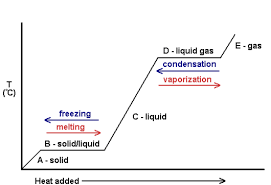
The graph of temperature versus temperature for a Heated.
The Melting Point of a Substance from its Cooling Curve
Determine experimentally the melting point of a substance from its cooling curve
Melting is the process of change of the state of matter from solid into liquid e.g ice into water.
Melting point (M.P): Itis the temperature at which solid substance tends to change into liquid.
Freezing: It is the process of change of the state of matter from liquid to solid e.g water into ice.
Freezing point: Is the temperature at which liquid change into solid. E.g water change into ice at OºC.
<!--[endif]-->Evaporation:Is the process of change liquid substance into vapour (gas)
Sublimation:
It is the change of state of matter from solid to gas and vice versa
without passing through the liquid phase.e.g. ammonium Chlonde ( NH4CL) and Iodine tends to sublime.
Sublimation
point is the temperature at which a solid tends to change into gas and
vice versa without passing through liquid state.
Condensation:Is the change of state of gaseous state of matter into liquid state.e.g steam into water.
Deposition:
Is the change of the state matter from gas into solid. e.g. Ammonium
chloride vapour and Iodine vapour into solid (NH4CI) and (Iodine).
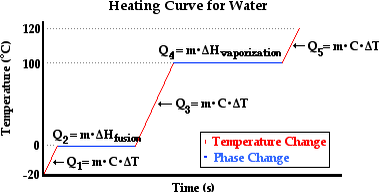
Demonstration of cooling and melting curves for (octadecanoic acid).
Melting point (m.p) table
| Substance | Melting point (ºC) |
| Copper | 1083 |
| Glass | 1000 – 1400 |
| Iron | 1450 |
| Lead | 327 |
| Pitch | 40 – 80 |
| Mercury | - 39 |
| Platinum | 1775 |
| Tin | 232 |
| Tungsten | 3377 |
The Effect of Impurities on the Freezing Point and the Boiling Point of a Substance
Demonstrate the effect of impurities on the freezing point and the boiling point of a substance
The
effect of dissolved substances on the boiling point and melting point
(M.P) means that the additional of impurities will result in increased
(B.P) and (M.P).
Effect of impurities on Boiling Point
When an impurity is added to a substance its boiling point is elevated, i.e., its boiling point is increased.
The
elevation in boiling point increases with increase in concentration of
the solute because when adding the solute vapour pressure of the
solution becomes lower than pure solvent. Thus the solution has to be
heated more to make the vapour pressure equal to atmospheric pressure.
Thus the boiling point gets elevated.
For example boiling point of water is 100oC
under normal atmospheric pressure. If we add sugar or salt to this
water its vapour pressure becomes lower and boiling point increases.
Generally, when 1 mole of any non electrolyte is dissolved in 1 litre of water the elevation of boiling point is 0.530.
Effect of impurities on freezing point
When an impurity is added its freezing point is lowered i.e. its freezing point decreases.
The
depression in freezing point increases with the increase in
concentration of the solute because on adding the solute the vapour
pressure of solution becomes lower than that of pure solvent. Since
freezing point is the temperature at which vapour pressure of liquid and
solid phase are equal, therefore, for the solution, this will occur at a
lower-temperature.
For example the freezing point of water is OoC
under normal atmospheric pressure. If we add sugar or salt to this
water its vapour pressure lowers and freezing point decreases.
Generally, when 1 mole of any non-electrolyte is dissolved in 1 litre of water the depression in freezing point of water is 1.860C.
Conclusion
- The impurities present in a liquid pull its two fixed points away from each other i.e. the freezing point is lowered while the boiling point is raised.
- The depression in freezing point and the elevation in boiling point increases with increase in the concentration of the solute or impurity i.e. these are the colligative properties that depends only on the no. of moles of the solute. They are independent of the nature of the solute.
The Effect of Pressure on the Boiling Point and Freezing Point of a Substance
Demonstrate the effect of pressure on the boiling point and freezing point of a substance
If a substance expands on solidifying, e.g., water, then the application of pressure lowers its melting point.
If a substance contracts on freezing, the pressure raises its melting point, e.g., paraffin wax.
The
freezing point of water is lowered by 0 .007 ºC per atmosphere increase
in pressure, whereas that of paraffin wax increases by 0.04 ºC per
atmosphere increase in pressure.
When a is liquid heated, its temperature rises and eventually remains constant.
Boiling
is the process of forming bubbles of vapour inside the body of a
liquid. It rises to the surface of liquid. The process usually depends
onexternal pressure above the liquid.
The Phenomenon of Regelation
Explain the phenomenon of regulation
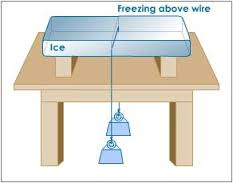
Regelation is the Refreezing process which takes place when copper wire is passed through the Ice BLOCK
Regelation
is the Refreezing process which takes place when the wire is observed
to Cuts right through the ice block and falls on the floor.
The Concept of Boiling and Evaporation in Respect to the Kinetic Theory of Matter
Give the concept of boiling and evaporation in respect to the kinetic theory of matter
If
a liquid is heated, the particles are given more energy and move faster
and faster expanding the liquid. The most energetic particles at the
surface escape from the surface of the liquid as a vapour as it gets
warmer. Liquids evaporate faster as they heat up and more particles have
enough energy to break away. The particles need energy to overcome the
attractions between them. As the liquid gets warmer more particles have
sufficient energy to escape from the liquid. Eventually, even particles
in the middle of the liquid form bubbles of gas in the liquid. At this
point the liquid is boiling and turning to gas. The particles in the gas
are the same as they were in the liquid except that theyhave more
energy. At normal atmospheric pressure, all materials have a specific
temperature at which boiling occurs. This is called the "boiling point"
or boiling temperature. As with the melting point, the boiling point of
materials vary widely, e.g., nitrogen -210°C, alcohol 78°C, and
aluminium 459°C.
Any
material with a boiling temperature below 20°C is likely to be a gas at
room temperature. When liquids boil the particles must have sufficient
energy to break away from the liquid and to diffuse through the
surrounding air particles. As these particles cool down and lose energy
they will condense and turn back to liquid. When steam is formed by
water boiling at 100°C the particles quickly condense as the surrounding
air temperature is likely to be much less that 100°C so the particles
cool rapidly. In fact the "steam" coming out of a boiling kettle can
only be seen because some of the gas particles have condensed to form
small droplets of water.
Evaporating
Within
a liquid some particles have more energy than others. These "more
energetic particles" may have sufficient energy to escape from the
surface of the liquid as gas or vapour. This process is called
evaporation and the result of evaporation is commonly observed when
puddles or clothes dry. Evaporation takes place at room temperature
which is often well below the boiling point of the liquid. Evaporation
happens from the surface of the liquid. As the temperature increases,
the rate of evaporation increases. Evaporation is also assisted by windy
conditions which help to remove the vapour particles from the liquid so
that more escape.
Evaporation
is a complex idea for children for a number of reasons. The process
involves the apparent disappearance of a liquid which makes the process
difficult for them to understand. It is not easy to see the water
particles in the air. Also, evaporation occurs in a number of quite
differing situations - such as from a puddle or bowl of water where the
amount of liquid obviously changes, to situations where the liquid is
less obvious - such as clothes drying or even those where there is no
obvious liquid at all to start with - such as bread drying out. A
further complication is that evaporation may be of a solvent from a
solution e.g. water evaporating from salt water to leave salt. These
situations are quite different yet all involve evaporation.
Evaporation
may also involve liquids other than water e.g. perfume, petrol, air
fresheners. The particle model can be used to explain how it is possible
to detect smells some distance away from the source.
Latent Heat of Fusion and Vaporisation
Demonstrate latent heat of fusion and vaporisation
Latent
Heat is the energy when is supplied in form of heat required to change
the state of the Matter from one form into another.
Latent heat is not determined (detected) by using a thermometer. So latent heat is also called hidden heat.
Specific
latent Heat is the energy supplied to a unit Mass and change Its state
from one state of Matter to another state of matter.
Latent heat of Vaporization is the heat required to change a liquid into a gaseous state at constant temperature.
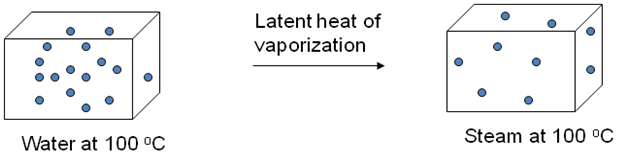
- Mass of Beaker = M1 kg
- Mass of Beaker + Water = M2 kg
- Time taken to Boil =t1 Minutes
- Time taken to Boil away = t2 Minutes
- Specific latent heat of = L J / kg Vapor
- Heat gained by steam = (M2 – M1)L
Generally
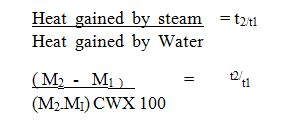
T1 time taken to evaporate
T2 time taken to boil
In this experiment , the Heat gained by the Beaker may be Neglected.
Latent heat of fusion is the amount of heat required to change a substance from solid to liquid at constant temperature.
Example 4
Calculate the amount of Heat required to melts 800g of Ice at 0ºC The specific Latent of fusion of Ice 33400J/kg
Data given:
Mass of Ice , M = 800g (0.8kg)
Specific Heat of fusion, L = 33400 J/kg
Heat gained, H = ML
H= ( 0.8 x 33400J/ kg)
H = 267520J
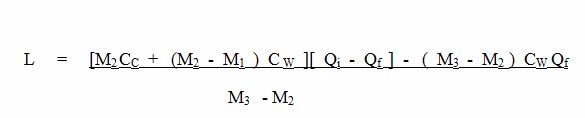
Determination of the specific Latent Heat of fusion of Ice.
- Mass of Calorimeter + stirrer = M1
- Mass of calorimeter +Water =M2
- Mass of Calorimeter +Water = M3
- Initial Temperature of Water = Q1
- Final temperature of Water =Qf
- Mass of Water = ( M2 - M1 )
- Mass of Ice = ( M3 - M2 )
The Ice melts and forms Water at 0ºC .The Water formed warm up to Temperature Qf.Heat gained by ice during melting at 0ºC = (M3 - M2)L where L is the specific latent Heat of fussion.
Heat gained by the water formed = (M3 - M2) CW QF
Where
- CW is the specific heat capacity of water.
- Heat lost by the original water in the calorimeter = (M2 - M1) ( Q1 - QF ) Cw.
- heat lost by calorimeter and stirrer = M1 CC ( Qi - Qf ).
- Cc is the specific heat capacity of the material of the calorimeter.
Applying the heat equation:
(Heat
gained by ice in Melting + Heat gained by the Water formed) =(Heat lost
by calorimeter and stirrer + Heat lost by original Water)
( M3 - M2) L + (M3- M2) CW QF= M1 CC (Q1 - QF)+ (M2- M1 CW Q1 - QF)
Specific
Latent heat of Vaporisation is the amount of heat required to change a
unit Mass of liquid into gaseous state ( Vapour) at constant
temperature.
Specific
latent Heat of fusion is the amount of heat required to change a unit
Mass of solid substance into liquid at constant temperature
| SUBSTANCE | SPECIFIC LATENT HEATOF FUSSION J/ kg |
| Ice | 334400 |
| Naphthalene | 146300 |
| Lead | 24662 |
| Copper | 179740 |
| Aluminum | 317680 |
| Gold | 66880 |
Example 5
0.6
kg of ice at - 10ºC is dropped into 2kg of Water 49ºC contained in a
Copper calorimeter of mass 0. 15kg . If the final temperature of the
Mixture is 20ºC fin d the specific latent Heat of fusion of ice.
Where
- Specific Heat capacity of ice = 2.1 x 10³ J/ KgºC
- Specific Heat capacity of copper = 420 J/ Kg ºC
- Specific Heat Capacity of Water = 4200 j/ Kg º C
Solution
Heat gained by ice during warming up form - 10 ºC to 0ºC
= ( 0 . 6 ×2 . 1 X 103 ×10)
= 12600J
Heat gained when ice at 0ºC changes to water at 0ºC = 0.6L; where L is the latent heat of fusion of ice
Heat gained by cold Water in warming up from 0ºC to 20ºC
=( 0 . 6 ×4 . 2 × 103 × 20)
=50400 J
Heat lost by Water during cooling from 49ºC to 20ºC
= 0 . 15 ×420 ×29
= 1827 J
But
Total Heat gained = Total Heat lost
12600 + 0.6 L + 50400 = 243600 + 1827
L = 245427 - 6300\ O.6
L = 304045J/ Kg
The Mechanism of Refrigeration
Describe the mechanism of refrigeration
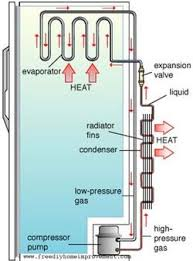
Refrigerator
is a machine which can enable Heat to flow from a cold Region to a Hot
region.The Basic principle used in Refrigeration is Cooling by
absorption of latent Heat
How it Works
A volatile liquid such as freon, evaporates inside the copper coils A surrounding the freezing cabinet or the refrigeration.
- The latent heat of Vaporization comes from the air surrounding the coil i.e. from the inside of the freezing g cabinet
- An eclectically driven pump P remove the vapor from A and force it into the heat exchangerC, which is made of copper coils.
- The coils of the heat exchanger are filled with cool fins F
- In the heat exchanger, vapor is compressed by the pump and condensed back to liquid.
- The conversion of vapour into liquid in (c) gives out the latent heat of vaporization, which is conducted away by the fins.
- The condensed liquid is then returned to the evaporator coil (A) through avalve (V) (in this way a continuous circulation of vapour and liquid is set up).
- The rate of evaporation and the degree of cooling is controlled by a thermostat, which switches the pumps motor on and off at intervals.
- The thermostat can be adjusted to give the desired low temperature inside the freezing cabinet where food is preserved.
TOPIC 8: VAPOUR AND HUMIDITY
Vapour
The Process of Evaporation of Liquid
Explain the process of evaporation of liquid
Vapours
- These are molecules which escape into the atmosphere after liquids are heated.
- When a liquid is heated strongly then molecules tends to escape ( those molecules are called vapour).
- Most liquids evaporates at any temperature however liquids may vary in the rate at which they evaporate at ordinary temperature.
- Alcohol and ether evaporate rapidly but lubricating oil and mercury hardly evaporate.
- Evaporation of a liquids result in the formation of vapour.
Factors Affecting Evaporation of a Liquid
Identify factors affecting evaporation of a liquid
There are several factors which affect evaporation of liquids when heated which include the following:
- Nature of the liquid: Normally liquids evaporation differs depending on the nature of liquid. Example; Volatile liquids evaporate faster than non-volatile liquids, which evaporate slowly. Alcohol evaporates faster than other liquids like water. The boiling point of alcohol is 780C while that of water is 100oC.
- Pressure above the liquid (atmospheric pressure): When the atmospheric pressure is high, the rate of evaporation may be reduced.
- Surface energy of the liquid: This forms a boundary or skin between the liquid and the atmosphere. The surface energy prevents molecules with lower kinetic energy from escaping into the atmosphere. Some liquids such as alcohol have low surface energy , hence they evaporate rapidly.
Question Time 1
Why do molecules escapes when the liquid is heated?
When the liquid is heated, the molecules tend to gain (absorb) kinetic energy hence the random speed of the moleculesincreases.
The
process of evaporation of liquid can be explained using Kinetic
Theory.When a liquid is left to evaporate in a closed container, the
pressure of the vapour in the container gradually increases.
Difference between Saturated and Evaporation of a Liquid
Distinguish between saturated and evaporation of a liquid
Vapours
The
molecules in a liquid are in a state of continuous motion and some of
those at the liquid surface will gain sufficient energy to escape from
the surface altogether. The molecules that have left the surface are
said to be in the vapour state. The difference between a vapour and a
gas is purely one of temperature, a vapour being a gas below its
critical temperature.
This
phenomenon is known as evaporation. The number of molecules leaving the
surface, and hence the rate of evaporation, will increase with
temperature as the liquid contains more energy at a higher temperature.
The effect of the evaporation of a liquid can be shown clearly by the
following experiment.
Some
ether is run into the flask, as shown in the figure below. It will
evaporate in the enclosed space and the pressure that it exerts on the
water will force a jet of water out of the tube. Warming the liquid will
increase this evaporation and give a more powerful jet.
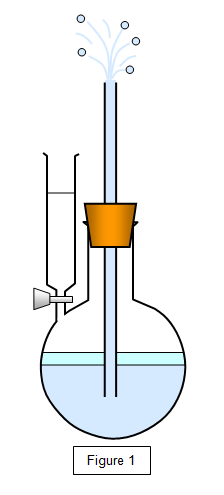
You can show that the rate of evaporation may be increased by:
- Warming the flask gently.
- Increasing the area of the liquid surface.
- Blowing a stream of air across the surface.
- Reducing the pressure above the liquid surface.
Saturated vapours
When
a liquid is in a closed container the space above the liquid is full of
vapour, and the vapour is then described as a saturated vapour - this
means that the density of the liquid molecules in the air is a maximum.
This is due to molecules continually escaping and reentering the liquid.
At any moment the number of molecules leaving the surface will be equal
to the number returning to it and so a dynamic equilibrium is set up.
The
properties of saturated vapours were first investigated by Dalton
around 1800. This is shown in Figure 2(a), which shows a state before
saturation has been reached (when there will be more molecules leaving
the surface than returning to it) and Figure 2(b), which shows the
saturated state. A dynamic equilibrium exits here.
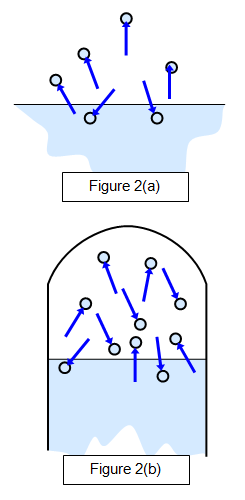
This
vapour will exert a pressure and if there is sufficient liquid the air
above the liquid surface will be saturated with vapour; the pressure
that this saturated vapour exerts is known as the saturated vapour
pressure (s.v.p.) of the liquid at that temperature.
Notice
that since the velocity of the molecules increases with temperature the
saturated vapour pressure also increases with temperature, and
therefore the temperature of the vapour must be specified when quoting
its saturated vapour pressure (s.v.p.)
The Effect of Temperature on Saturated Vapour Pressure (S.V.P) of a Liquid
Explain the effect of temperature on saturated vapour pressure (S.V.P) of a liquid
Saturated vapour pressure (S.V.P):Is
the pressure exerted by vapour when a liquid is heated and reaches a
state of Equilibrium where eventually the rate at which the molecules
leave the liquid is equal to the rate at which others return to it.
The
Height, of mercury represents the saturated vapour pressure of the
liquid in the flask. Saturated vapour pressure increases with the
increase in Temperature (Ti) and the increased with decrease in
Temperature (Td).
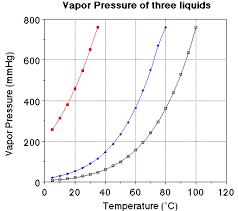
The graph of saturated vapour pressure (svp) against Temperature
The
graph shows as saturated vapour pressure (s.v.p) increases then the
temperature will increase and vice versa for decrease of temperature.
Boiling
point (B.P):Is the temperature reached where the saturated vapour
pressure (S.V.P) is equal to external atmospheric pressure.
The Boiling point of alcohol is 78OC water is 100OC
and pressure of the atmosphere as 76cm of mercury.The intersection of
the normal atmosphere pressure line with the liquids S.V.P curve.
The Concept of Humidity
Explain the concept of humidity
HUMIDITY is the measure of the extent to which the atmosphere contains water vapour (moisture).
The Formation of Dew
Explain the formation of dew
DEW:These are deposits formed when the temperature fall slowly in the drops of water vapour.
Dew
point (D.P): Is the temperature to which air must be cooled to become
saturated. For example in an air container, if water vapour at pressure
of 8mm of mercury were to be cooled , dew would form at 7.90C.
Measurement of Relative Humidity
Measure relative humidity
Absolute
humidity is the mass of water vapour present in a unit volume of it and
is usually expressed in grams per cubic metre (g/m3). The
absolute humidity is not very frequently used since in practice we're
more often concerned with the degree of wetness of the air.
Relative
Humidity (R.H) is the ratio of the mass of water vapour actually in a
unit volume of air to that is required to saturate it at the same
temperature.
R.H = Mass of water vapour/Volume of air required to saturate the air at the same temperature
It is common practice to quote relative Humidity as a fraction or a percentage.
Thus
R.H = m/M X 100%
Where
M = mass of water vapour actually present in a unit of given volume of air.
M= mass of water vapour required to saturate the air at the same temperature.
Relative Humidity
is also defined as the saturation vapour pressure of water at the dew
point divided by the saturation vapour pressure of water at the original
air temperature.
R.H = s.v.p at dew point/s.v.p at air Temperature
Note:The
low value of relative humidity of air means that evaporation takes
place readily from the surface of water.The high value of relative
Humidity then evaporation does not take place readily from the surface
of water.
Humid atmosphereis saturated with water vapour.
Perspiration: Is the evaporation of sweat from the skin, is not so effective at cooling the body in humid atmosphere.
Note:
- Cotton manufacturing industries are constructed on sites where the relative Humidity (R.H) Is High.
- Cotton fibres must not become too dry, otherwise they become Brittle and hence cause difficulties in spinning.
- In contrast, a dry atmosphere is required by ware House for the storage of food, Tobacco and assembling of certain electrical components.
- Air – conditioning plants are installed in ships and buildings for the purpose of moderating Humidity.
MEASURING RELATIVE HUMIDITY
Hygrometers are
instruments used for finding relative humidity at a given place. With
most hygrometers, the relative humidity is determined by first finding
the dew point and then using vapour pressure tables.
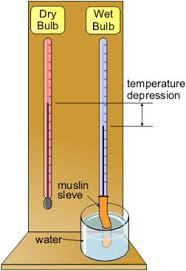
A
very common type of Hygrometer (often known as Mason’s hydrometer). A
piece of muslin wick is wrapped round the bulb of one the thermometer
and its lower and dipped into water capillary action keeps the Muslin
wrapped around the bulb wet.
- Evaporation of water surrounding the wet bulb absorbs heat from the bulb, consequently the temperature of the wet bulb falls.
- The reading of the wet bulb thermometer is normally found to be several degrees below that of the dry bulb Thermometer is known as the wet bulb depression.
Example 1
If the dry the temperature is 300C when the wet bulb temperature is 20OC then the wet bulb depression is 10oC the rate Evaporation depends on the amount of water Vapour present in the air.
The
less moisture the air has the greater the difference between the two
thermometer reading.The difference is therefore greatest for dry air and
zero for saturated air.
REGNAULT’S
HYGROMETER: Is used to determine dew point and relative
Humidity.Simplified form of regnault’s hygrometer consist of two test –
tubes A and B with silvered ends C and D Respectively.
- Test tube A contains ether and it is fitted with rubber stopper which carries a thermometer T and two narrow tubes E and F.
- Test tube B. is empty and serves as comparison.
- Air is bubbled through ether via the narrow tube E by applying a fitted pump at the end of the Narrow tube F. This causes the rapid evaporation which results in the absorption of latent heat from ether and the container.
- Air surrounding the tube cools to temperature at which the water vapour present is sufficient to saturate it.
- Consequently is seen to form on C while D appears unchanged.
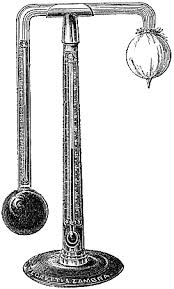
Above show Regnault (dew point ) hygrometer.
- The reading of the thermometer T is then noted.
- The flow of air through the ether is then stopped and the apparatus allowed warming up.
- The temperature at which the dew on C disappears is noted.
- The dew point is then taken as the mean of the two temperatures.
- Suppose the dew pint is Q1 and the actual air temperature is Q2 if the tables the value of S.V.P for water at Q1 and Q2 are X and Y millimeters of mercury Respectively.
- R.H = S.V. Pat Q1 x 100%/S.V.P at Q2
Example 2
The dew point in a room at a temperature of 100c
is 12,55C if the saturated vapor pressure if saturated vapor pressures
at these two temperatures are 15.5mm and 10.9mm of mercury respectively
calculate the Relative Humidity.
Solution
Required: To find relative humidity, RH.
RH = S.V.P at dew pointx 100%/S.V.P at air temperature
RH= 10.9/15.5× 100%
Relative Humidity, RH = 71%
The Knowledge of Humidity in Daily Life
Apply the knowledge of humidity in daily life
Water in the atmosphere exists in different forms example: Clouds, Rain, Snow, Hail stones, Mist, Fog and Smog.
Clouds.
- Consist of the tiny droplets of water or Ice floating in the sky formed by condensation of water vapor in the upper atmosphere.
- Clouds formation occurs when temperature falls below the dew point and small particles of dust or salt crystals are present to act as nuclei on which condensation can begin.
- Cooling is due to upward movement of air accompanied by example.
- Clouds may also formed when a warm moist air current meets a cold one if the drops become big enough by joining together they may fall as rain.
Rain: These are drops of water that fall on the grounds when cooling occurs in the clouds.
Snow: Formed when the dew points is below the freezing point (F.P) 0OC.Under these conditions, the atmospheric vapour condenses directly into ice crystal.
Hail stones
- Formed due to super cooling of water droplets in such a way that the droplets are cooling below 0oC without freezing.
- When these droplets are carried upwards by ascending air currents, they solidify upon coming into contact with ice crystals in the upper atmosphere.
- Hail stones are dangerous to air craft and human beings.
Mist: Is the condensation of vapour Iito water droplets occurring near the ground.
Fog: Is a mist In which Visibility does not extend beyond 1km.
Smog:This is dense fog, where visibility is reducing to a few metres.
FORM THREE ALL TOPICS
FORM THREE PHYSICS STUDY NOTES TOPIC 1: & TOPIC 2:
FORM THREE PHYSICS STUDY NOTES TOPIC TOPIC 3: & TOPIC 4:
FORM THREE PHYSICS STUDY NOTES TOPIC 5: & TOPIC 6:
FORM THREE PHYSICS STUDY NOTES TOPIC TOPIC 7: & TOPIC 8:
FORM THREE PHYSICS STUDY NOTES TOPIC TOPIC 9:
O'LEVEL PHYSICS
PHYSICS FORM FOUR
PHYSICS FORM THREE
PHYSICS FORM TWO
PHYSICS FORM ONE
FORM THREE PHYSICS STUDY NOTES TOPIC 1: & TOPIC 2:
FORM THREE PHYSICS STUDY NOTES TOPIC TOPIC 3: & TOPIC 4:
FORM THREE PHYSICS STUDY NOTES TOPIC 5: & TOPIC 6:
FORM THREE PHYSICS STUDY NOTES TOPIC TOPIC 7: & TOPIC 8:
FORM THREE PHYSICS STUDY NOTES TOPIC TOPIC 9:
O'LEVEL PHYSICS
PHYSICS FORM FOUR
PHYSICS FORM THREE
PHYSICS FORM TWO
PHYSICS FORM ONE


No comments