
CHEMISTRY FORM TWO STUDY NOTES TOPIC 1: OXYGEN & TOPIC 2: HYDROGEN

Oxygen
exists in air to an extent of 21% by volume (or 23% by weight). It is
the most abundant element on earth, accounting for ½ the total mass of
the earth’s crust. Oxygen is mainly found in combined states as oxides,
hydroxides, silicates, sulphates, carbonates, water, etc. Its ease of
combination with other elements to form compounds shows that oxygen is a
very reactive element.
Oxygen can be prepared in the laboratory from either hydrogen peroxide solution or potassium chlorate salt.
A Sample of Oxygen Gas in the Laboratory
Prepare a sample of oxygen gas in the laboratory
(i) Laboratory preparation of oxygen from hydrogen peroxide solution
The
most common method for the preparation of oxygen in the laboratory is
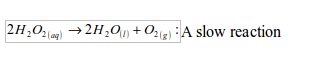
by decomposition of hydrogen peroxide solution. The gas is prepared by
catalysing the decomposition of hydrogen peroxide with manganese (IV)
oxide. At room temperature hydrogen peroxide decomposes (breaks down)
very slowly. It decomposes to water and oxygen.
To
speed up the decomposition process, and hence collect substantial
amount of oxygen gas within a short time, black manganese (IV) oxide is
added as a catalyst.

A catalyst
is a substance that, although present in small quantities, will alter
the rate of a chemical reaction but will remain chemically unchanged at
the end of the reaction.
Preparation method
Hydrogen
peroxide (20 vol.) is added drop by drop to manganese (IV) oxide, which
catalyses the decomposition of the peroxide. Oxygen is collected over
water as shown in figure bellow. The gas is collected by downward
displacement of water because it is only slightly soluble in water.

Apparatus for laboratory preparation of oxygen from hydrogen peroxide solution
(ii) Laboratory preparation of oxygen from potassium chlorate
Oxygen
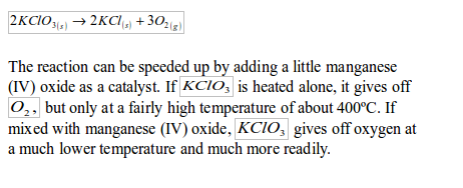
can also be prepared by thermal decomposition of potassium chlorate.
When this compound is heated, it decomposes slowly into potassium
chloride and oxygen:
Preparation method
A
grinded mixture of potassium chlorate and manganese (IV) oxide, at a
ratio of 4:1, is placed in hard glass tube and fitted up as shown in
figure bellow. The mixture is then heated and oxygen gas is readily
given off. The gas is collected over water. Oxygen has almost the same
density as air, so it cannot be collected by the upward displacement of
air. It is possible to collect it by downward displacement of water as
shown in the figure because it is only slightly soluble in water.
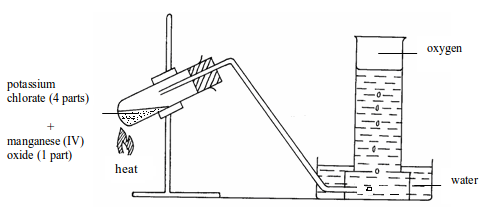
Apparatus for laboratory preparation of oxygen from potassium chlorate
Test for oxygen
Oxygen rekindles a glowing splint of wood. No gases behave like this except dinitrogen oxide, NO2, from which oxygen can be distinguished by the following properties:
1. Oxygen has no smell but dinitrogen oxide has a sweet, sickly smell.
2. When heated with nitrogen monoxide, oxygen produces brown fumes of nitrogen dioxide.
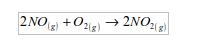
Dinitrogen oxide has no effect on nitrogen monoxide.
Simple Experiments to Demonstrate Properties of Oxygen Gas
Perform simple experiments to demonstrate properties of oxygen gas
1. Action of oxygen on metals
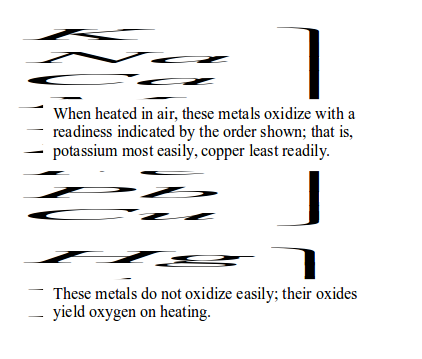
The manner in which oxygen reacts with metals is summarized in the list below.
Reaction with specific metals
Sodium
When burnt in excess of oxygen, sodium burns with an intense yellow flame to give sodium peroxide.
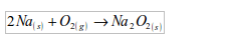
The product is a yellow solid which dissolves in water to give an alkaline solution.
Calcium
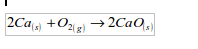
The metal burns in air with a red flame giving a white solid of calcium oxide:
Magnesium
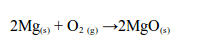
Magnesium burns with a brilliant white flame, leaving a white ash of magnesium oxide:
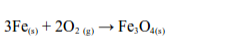
Iron
Iron burns in air with a shower of sparks leaving a brown-black solid of triiron tetraoxide:
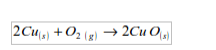
Copper
Copper burns in a stream of oxygen to give a black solid of copper (II) oxide:
In general, metals react with oxygen to form basic oxides.
Action of oxygen on non-metals
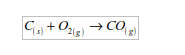
Carbon
Red-hot carbon combines vigorously with oxygen to form carbon dioxide, giving no residue:
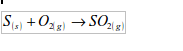
Sulphur
Sulphur burns with a blue flame giving misty white fumes of sulphur dioxide:
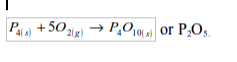
Phosphorus
Phosphorus
bursts into flame in air or oxygen, without being heated (that is why
it is stored under water). A white solid, phosphorus pentoxide is
formed.
Properties of Oxygen
Explain properties of oxygen
Physical properties
- It is a clear, colourless gas with no smell.
- It is a neutral gas (it is neither basic nor acidic in character)
- It is slightly soluble in water (100 cm3 of water at room temperature dissolves about 4 cm3 of oxygen).
- It has almost the same density as water although slightly denser than air. 5. It boils at -183ºC and freezes at -218ºC.
Chemical properties
- Oxygen supports combustion
- It is a very strong oxidizing agent.
- Oxygen is very reactive. It reacts vigorously with a great many metals and non-metals to form basic and acidic oxides respectively. Metal + Oxygen gives metallic oxide (most of these are basic in character). Non-metals + Oxygen gives non–metallic oxide (most of these are acidic in character).
Hydrogen
is the lightest of all the elements. There is very little hydrogen in
the earth's atmosphere. Hydrogen is so light that its molecules are not
held by the earth's gravity and they diffuse into space. Overall, it is
the most common element in the universe. It is probable that is forms
about 90% of the total mass of the universe. It is believed that the sun
composes almost of hydrogen and helium. Hydrogen occurs naturally in
air as hydrogen gas. It also occurs in combined state in water, acids,
petroleum, and natural gas and in almost all organic substances
(proteins, carbohydrates, fats, etc.).
The Preparation of Hydrogen Gas in a Laboratory
Explain the preparation of hydrogen gas in a laboratory
Hydrogen
is most commonly prepared in the laboratory by the action of dilute
mineral acids on certain metals. The most convenient way to prepare
hydrogen in the laboratory is by addition of dilute hydrochloric acid on
zinc granules. Zinc and hydrochloric acid are chosen because they
produce the gas at a steady rate.
The
gas may be collected by downward displacement of water. But when the
gas is required free from moisture it is passed through water to remove
first, any hydrogen chloride gas and then through concentrated sulphuric
acid to remove moisture before being collected by upward delivery. The
gas is prepared by upward delivery method because it is lighter than air
and is soluble in water.
Method of preparation
Set
up the apparatus as shown in figure bellow. Into a flat-bottomed flask,
put some pieces of zinc and add dilute hydrochloric acid by means of a
thistle funnel. There is effervescence, and a gas is given off which is
collected over water. Zinc chloride, which is formed, dissolves to form
zinc chloride solution.
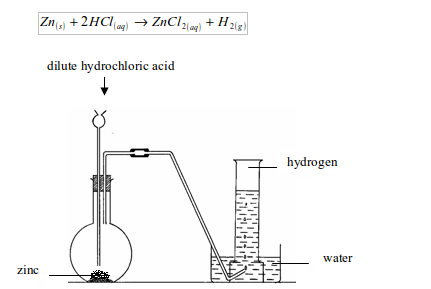
Preparation of hydrogen by the action of dilute hydrochloric acid on zinc metal
Test for hydrogen
A mixture of hydrogen and air explodes with a 'pop' sound when a flame is applied.
The Properties of Hydrogen
Explain the properties of hydrogen
Physical properties
Includes
- It is a colourless, tasteless and odourless gas.
- It is almost insoluble in water (2 volumes of hydrogen gas dissolve in 100 volumes of water at 8ºC).
- It is the lightest of all gases. It is about 20 times lighter than air (one litre of hydrogen at 0ºC and 760 mmHg pressure weighs 0.0899 grams)
- It condenses at -254ºC to a colourless liquid (and liquid hydrogen freezes at -259 ºC to form colourless crystals).
- It is neutral to litmus. 6. It does not support combustion.
Chemical properties
1.
It combines easily with other chemical substances at high temperatures.
For example, it combines with oxygen to form water. A mixture of the
two gases will not react at room temperature. At higher temperatures, or
when a flame is applied, the mixture will explode. When hydrogen and
oxygen explode, the product is water.
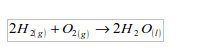
Water is just the common name for the substance "hydrogen oxide".
2.
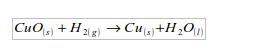
Hydrogen acts as a reducing agent, by removing oxygen from some
compounds. For example, copper (II) oxide is reduced to copper by
heating it in a stream of hydrogen. The hydrogen is oxidized to water.
3. It is neither acidic nor basic, so it a neutral gas.
4. A mixture of hydrogen and oxygen explodes when lit.
An experiment on reduction of copper (II) oxide (CuO) using hydrogen
Aim: To investigate the effect of hydrogen on copper (II) oxide
Procedure
- Put about 5 g of copper (II) oxide in a Pyrex test tube and set up the apparatus as shown in figure bellow. Observe and note the colour of copper (II) oxide before the start of the experiment. What colour is it?
- By means of a thistle funnel, add hydrochloric acid in a bottle containing zinc metal to generate hydrogen gas. Pass the gas through a U-tube containing a solid drying agent, calcium chloride.
- Place a dry cobalt (II) chloride paper near the mouth of a test tube as shown in figure bellow.
- Allow the hydrogen gas to pass through the apparatus for some time in order to displace all the air before lighting it.
- Heat the copper (II) oxide strongly until no further changes in colour of the cobalt (II) chloride paper takes place. You may repeat the experiment using lead (II) oxide and compare the results.
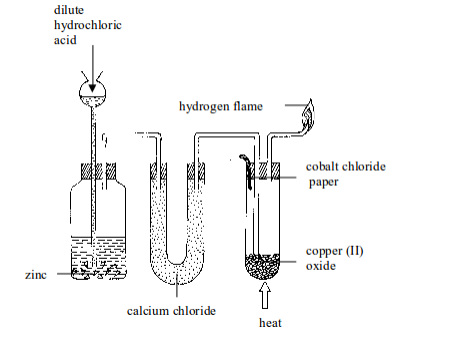
Reduction of copper (II) oxide with hydrogen gas
Questions
- What happens to the copper (II) oxide during the experiment?
- (a) What happens to cobalt (II) chloride paper? (b)Why is it used? (c) What other substance can serve the same purpose as cobalt (II) chloride paper?
- Enough time should be allowed for all the air in the test tube to be replaced by hydrogen before lighting the gas. What is bad about lighting a mixture of air and hydrogen?
- What do you think can cause the size of the hydrogen flame to deteriorate?
- (a) What element did hydrogen take from the copper (II) oxide? (b) Can hydrogen take the same element from any metal oxide?
Answers
1. Black copper (II) oxide is reduced by hydrogen to brown copper metal.
2. (a) Cobalt (II) chloride paper changes its colour from blue to pink.
(b)
The paper is used to indicate that water has been formed in the
reaction between copper (II) oxide and hydrogen. This water turns the
colour of the paper from blue to pink.
(c)
The other substance that can be used instead of cobalt (II) chloride
paper is white anhydrous copper (II) sulphate, which turns blue when in
contact with water.
3.
Enough time should be allowed for hydrogen to replace the air in the
test-tube because a mixture of hydrogen and oxygen in the tube is
explosive when lit.
4.
The size of the hydrogen flame deteriorates with time as hydrogen
supply grows smaller following complete displacement of hydrogen of the
hydrochloric acid with zinc. Deterioration can also be caused by use of
excess copper (II) oxide or strong heating, meaning that most hydrogen
is used in the reduction of the oxide.
5.
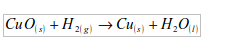
(a) The element taken by hydrogen from copper (II) oxide is oxygen. In
this experiment, hydrogen reduces copper (II) oxide to copper, while
hydrogen itself is oxidized to water:
(b) No. Hydrogen can only reduce those metals that are below it in the electrochemical (activity) series.
Uses of Hydrogen
Uses of Hydrogen Gas
State uses of hydrogen gas
1.
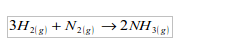
It is used in the manufacture of ammonia by the Haber process, which is
based on the direct combination of hydrogen and nitrogen.
2. It is used in the hardening of vegetable oils to make margarine.
3.
It was formerly used for inflating balloons and air ships. But hydrogen
is inflammable and many accidents occurred. Its use has been replaced
by helium (another gas occurring in air). Nowadays, hydrogen is used by
meteorologists to fill weather balloons, which carry weather instruments
that record information on various elements of weather in the upper
atmosphere.
4.
It is used to prepare water gas, which is used as a fuel for space
rockets. When hydrogen contained in water gas is burned in air, it
produces extremely high heat energy that is used to power rocket
engines.
5.
It is used in welding by the atomic hydrogen torch. The complete
combustion between hydrogen and oxygen is a highly exothermic reaction
and can produce an oxy-hydrogen flame that has a temperature of nearly
2000ºC, and is therefore useful in the welding and cutting of metals.
However, the explosive nature of the combustion of hydrogen with oxygen
makes the use of oxy-hydrogen flame less favourable than the
oxyacetylene flame.
6.
It is used in the synthesis of hydrochloric acid. In this case,
hydrogen combines directly with chlorine to form hydrogen chloride gas.

The hydrogen chloride gas is then dissolved in water to form hydrochloric acid.
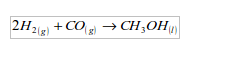
7. It is used in the manufacture of methanol (wood spirit). In this process hydrogen combines directly with carbon monoxide.
CHEMISTRY FORM TWO TOPIC 1 & 2.
CHEMISTRY FORM TWO TOPIC 3 & 4.
CHEMISTRY FORM TWO TOPIC 5 & 6.
CHEMISTRY FORM TWO TOPIC 7.
O'LEVEL CHEMISTRY
CHEMISTRY STUDY NOTES, FORM FOUR.
CHEMISTRY STUDY NOTES, FORM THREE.
CHEMISTRY STUDY NOTES, FORM TWO.
CHEMISTRY STUDY NOTES FORM ONE.


No comments